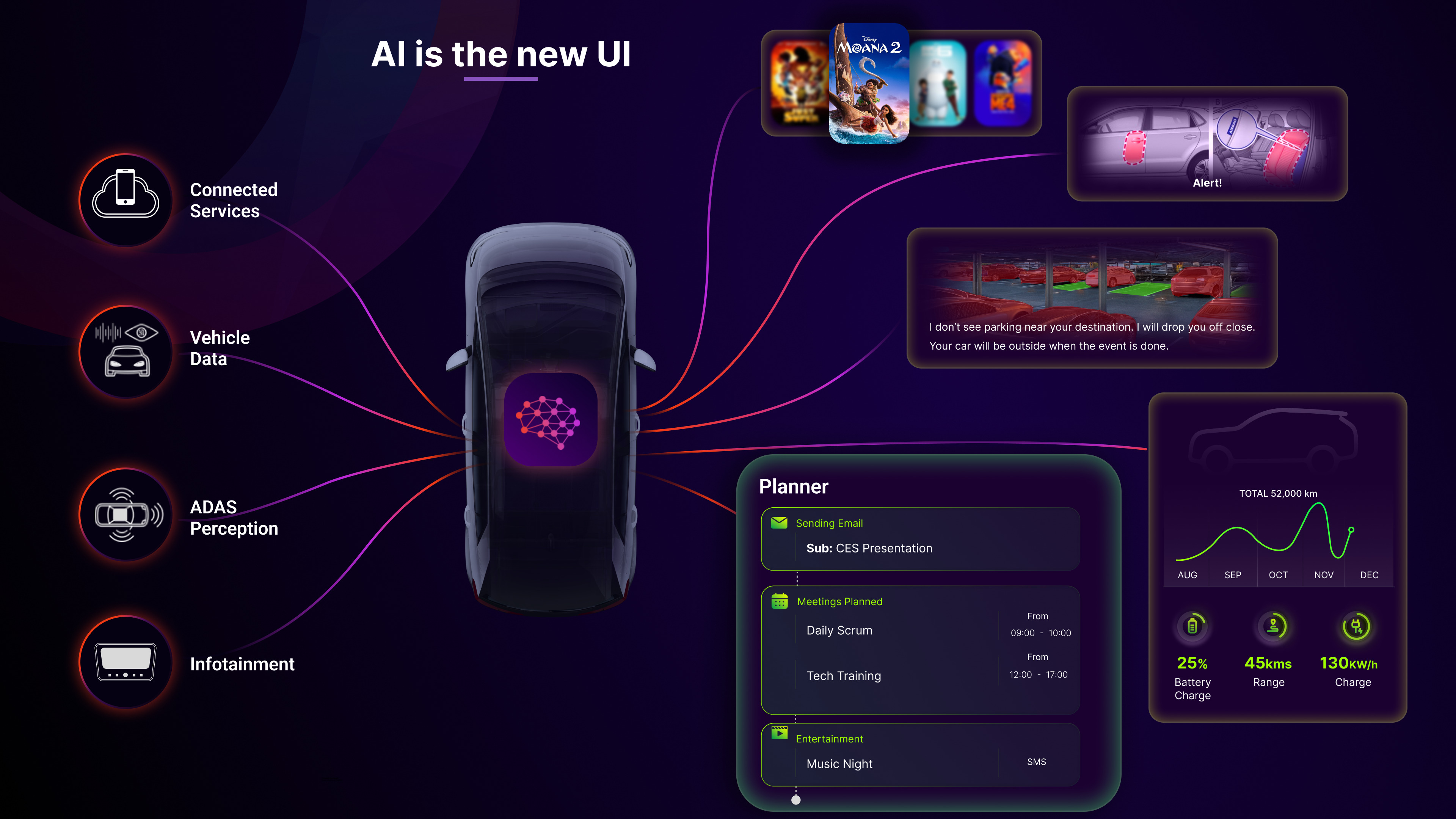
Cognito AI is the first comprehensive intelligent vehicle assistant on device integration, featuring dynamic visuals and responsive 3D avatars. It integrates Llama v3.2 and Qwen2.5 as foundation models, along with an Avatar Framework, speech models, voice-to-text, reasoning, and planning. This enables smart diagnostics, seamless navigation, and task planning, making this product a proactive and intelligent partner that anticipates needs and adapts in real-time.
The main challenge - It was never done before!
How to integrate LLM into the vehicle, to connect the driver with the car, fostering an emotional bond and encouraging interaction beyond basic commands like "Open the Navigation" or "Call George." The design issue was how to combine the LLM with 3D character models, a functional and dynamic UI, and engaging animations. The goal was to create User Experience that makes sense, builds an emotional connection with the user, gains their trust, and entertains them.
We faced numerous design challenges, including user interaction on multiple screens, various UI panels, customizable AI avatar assistants, 3D vehicles, and query cards, all integrated with the LLM and our overall AI framework.
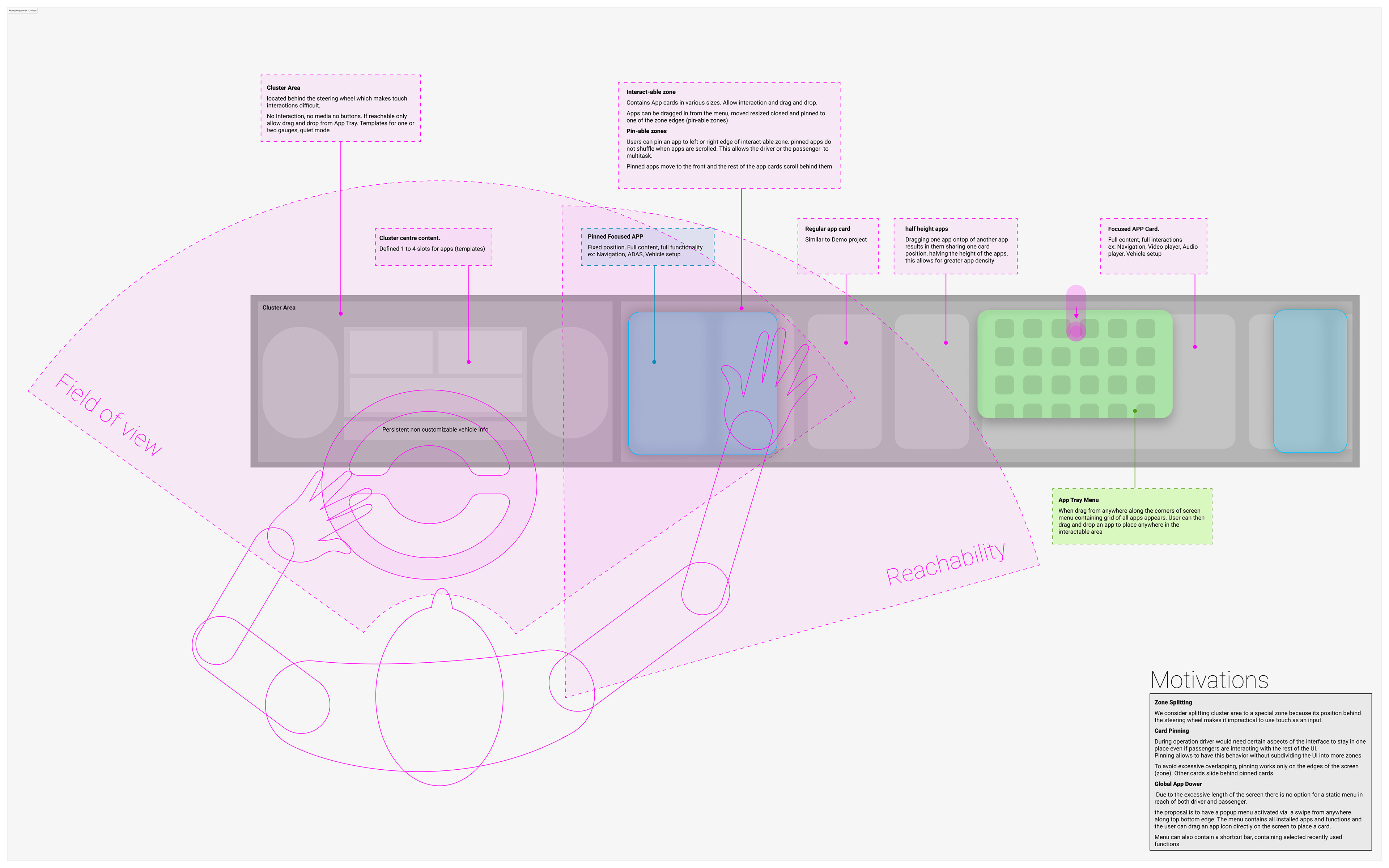
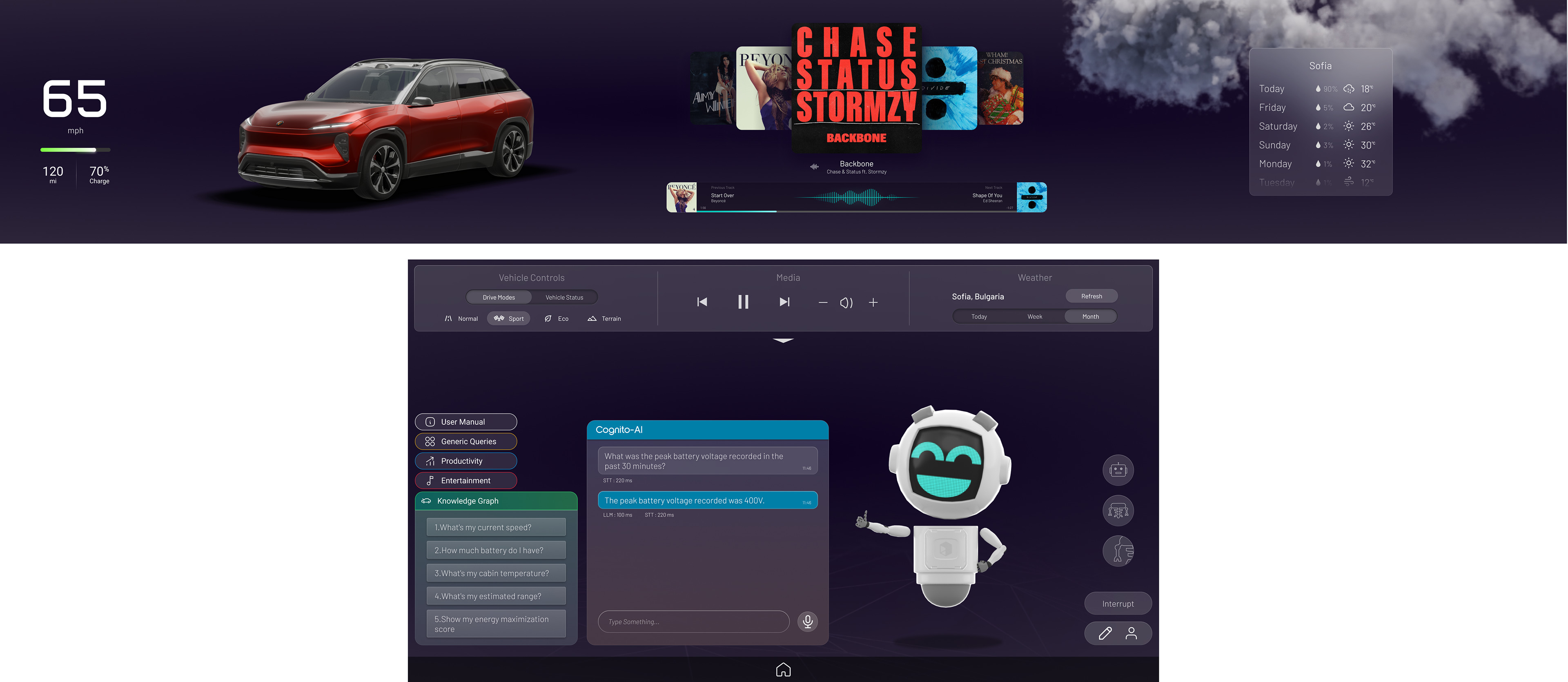
Getting started with the UX was already challenging due to the factors mentioned above. To complicate things further, we had two separate screens that had to work in perfect sync, but only one was a touchscreen. Additionally, the screens had different sizes and resolutions: a 17-inch touchscreen and a 34-inch widescreen display.
We had to creatively fit all controls for both screens onto the 17-inch touchscreen. These controls included widgets for the 34-inch screen, the 3D avatar, the avatar configurator with camera recognition, the LLM chat prompt, and query cards (guided questions). Quite the easy UX task, right?
The challenges in interaction design primarily revolved around user voice input and speech-to-text conversion (determining the AI's actions based on user input). To address potential voice input failures, we needed to implement touch controls for all essential features. This posed significant UI challenges, as the chatbox, query cards, and 3D avatar assistant already occupied much of the touchscreen monitor space. We had to come up with a solution for a default minimized view for all buttons, which could expand as needed (refer to the style guide section for examples).
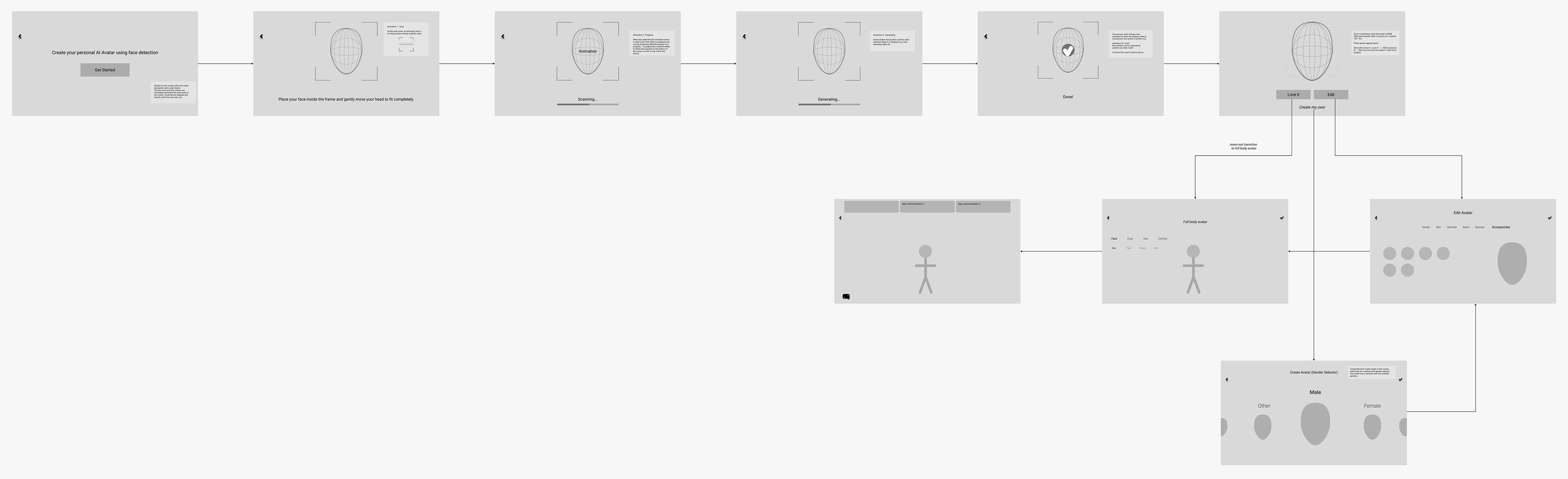
Here are a few wireframes from the hundreds of iterations completed:
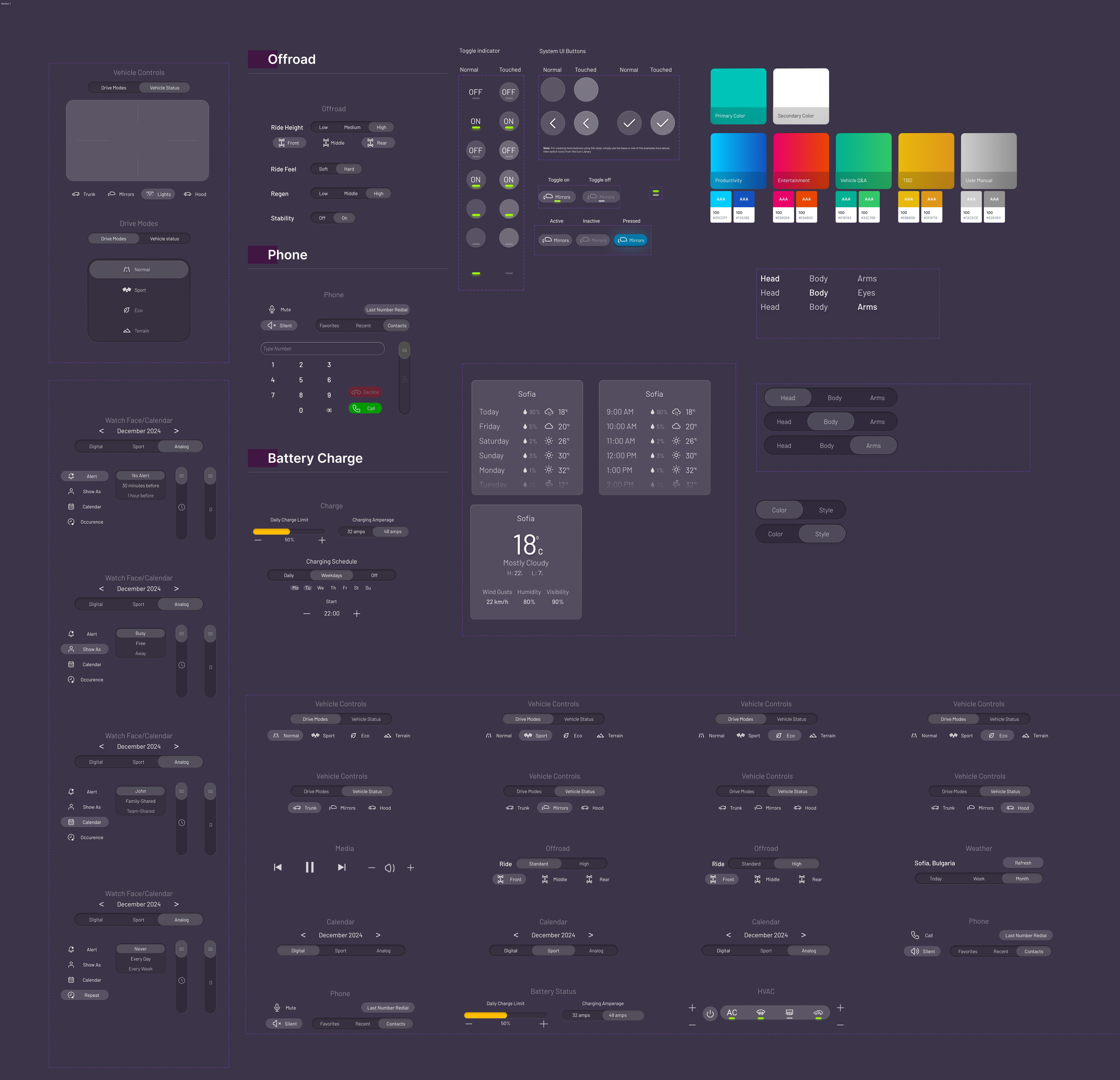
The CognitoAI style guide focuses on a futuristic yet familiar design that enhances the gamification experience. The user interface is clean and intuitive, while the 3D avatar configurator offers full customization. Users can choose from four 3D models and a wide range of body and facial features, clothing, and accessories.
The surrounding apps are utilizing both flat 2D and realistic 3D design styles with reconfigurable content, providing seamless user experience and minimized distractions for the user. Multiple iterations have been created for each component to ensure that all assets within an app are easy to read, interact with, and blend seamlessly with the rest of the environment.
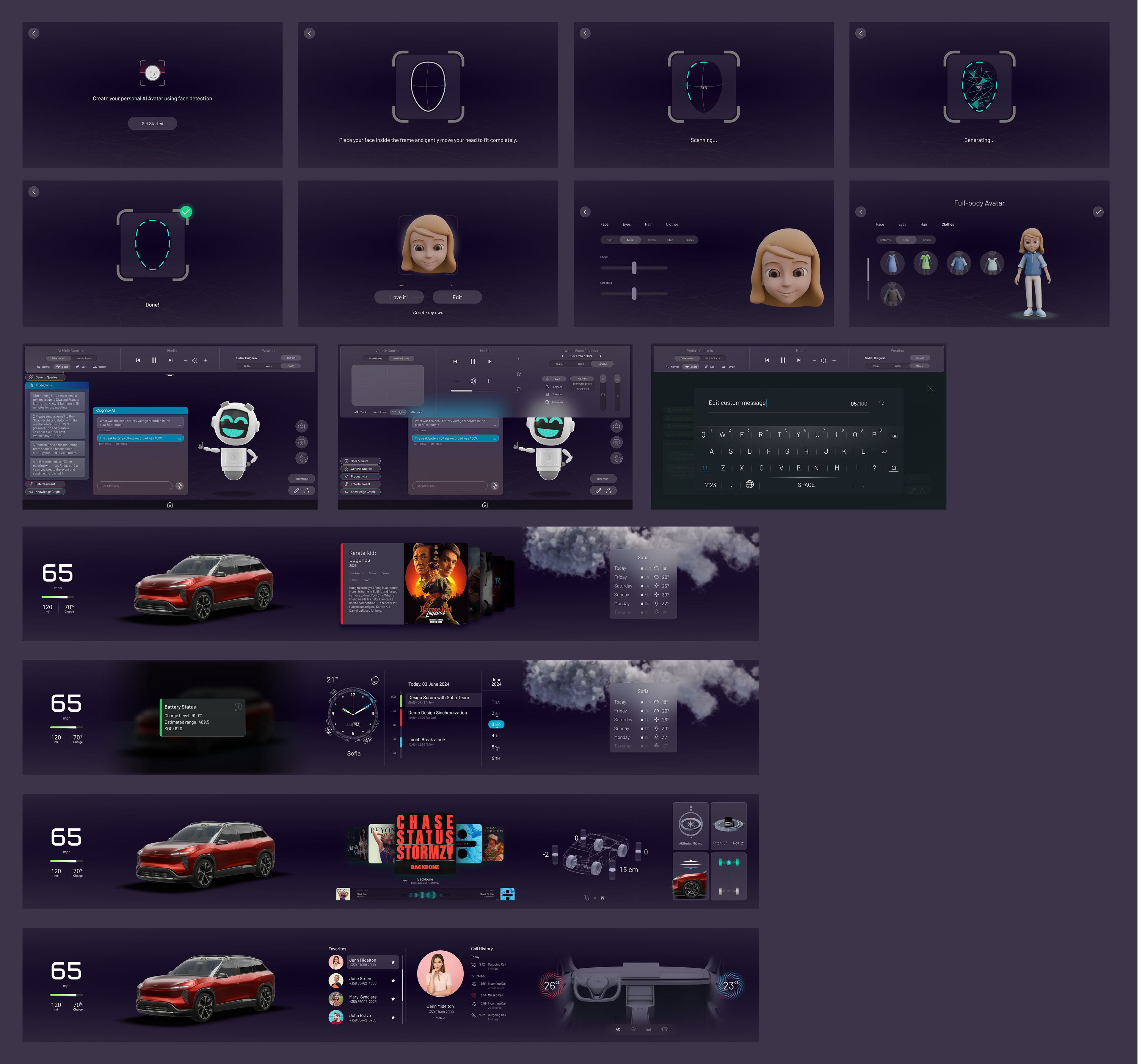
Motion design is crucial in this project to enhance the overall user experience. We focused on three main areas: First, displaying a high-quality, animated 3D car model that can demonstrate various use cases based on user needs and requests to the AI assistant. Second, creating a highly customizable and animated 3D avatar that visually responds to user requests.
Lastly, ensuring fluid widget transitions and micro-interactions that users can engage with via touchscreen buttons, query cards, and the chatbox.
You can find below a more detailed examples, covering some areas of motion design and animation in CognitoAI:
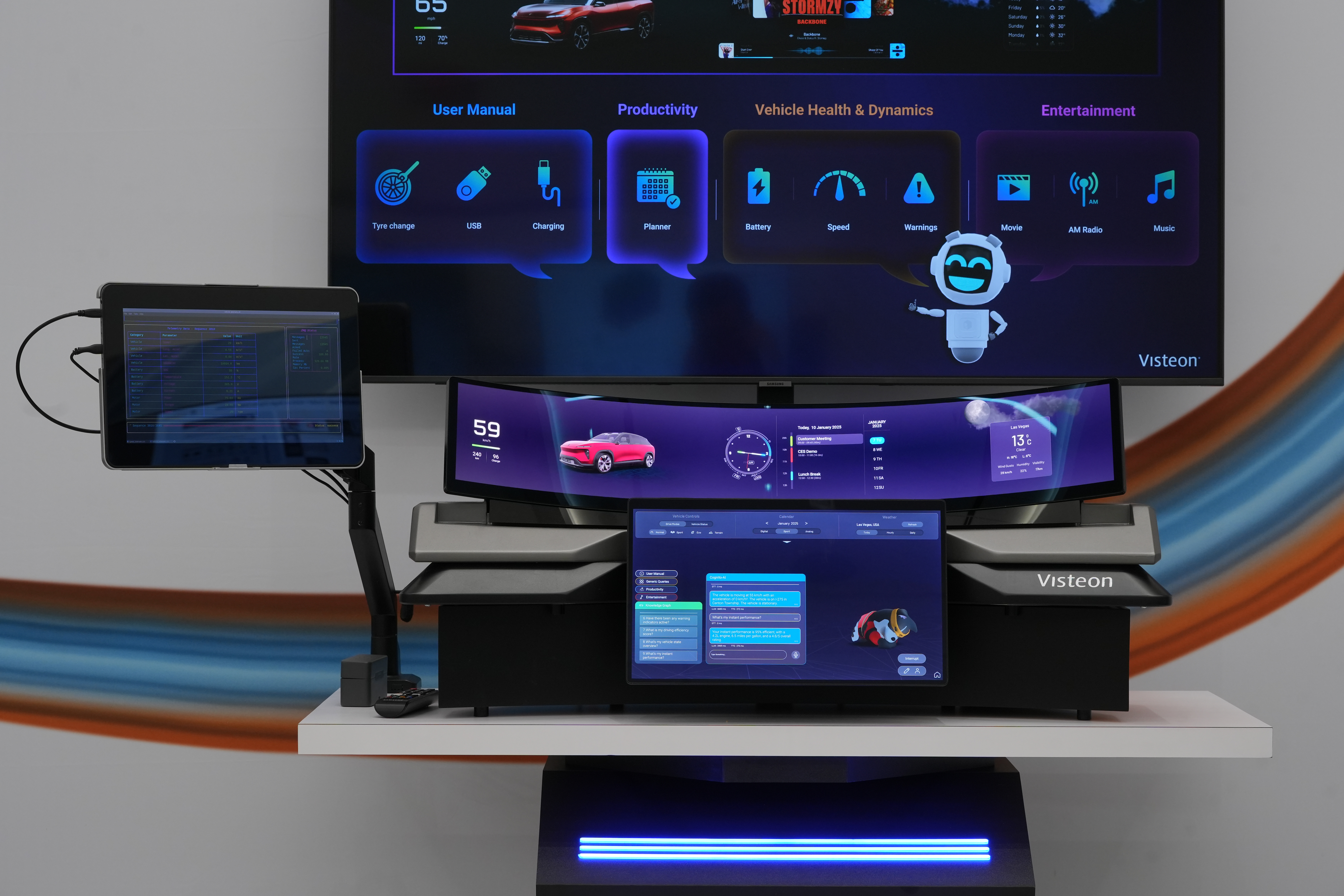
Below are materials showcasing the final design and implementation presented at the 2025 Consumer Electronics Show in Las Vegas. The project was extremely challenging but received very positive feedback from customers and partners.
This was the first end-to-end AI Assistant implementation showcased at CES. The project took just over four months to complete.
It is highly engaging, and the overall feedback highlighted that the 3D model and intuitive UI create an emotional bond, reduce distractions, and encourage users to explore its functionality more deeply.